
Post written by Sung Yong Han, MD, PhD, from the Department of Internal Medicine and Biomedical Research Institute, Pusan National University Hospital and Pusan National University School of Medicine, Busan, Jae Hee Cho, MD, PhD, from the Division of Gastroenterology, Department of Internal Medicine, Gangnam Severance Hospital, Yonsei University College of Medicine, Seoul, and Dongwook Oh, MD, PhD, from the Division of Gastroenterology, Department of Internal Medicine, Uijeongbu Eulji Medical Center, Eulji University School of Medicine, Uijeongbu, South Korea.

Our study compared remimazolam and propofol for deep sedation during ERCP in a prospective, multicenter, randomized controlled trial. We aimed to determine whether remimazolam could provide effective procedural sedation while improving cardiopulmonary safety during complex therapeutic endoscopy.
ERCP often requires prolonged and stable deep sedation because it is technically demanding and frequently performed in elderly patients with multiple comorbidities. Although propofol is widely used in daily practice, sedation-related adverse events such as hypotension and respiratory instability remain important concerns.

Remimazolam is an ultrashort-acting benzodiazepine with rapid onset and recovery, organ-independent metabolism, and availability of flumazenil reversal. These characteristics make it an attractive option for advanced endoscopic procedures performed outside the operating room.
However, prospective randomized data specifically evaluating remimazolam during ERCP have been limited, to our knowledge. We therefore believed it was important to investigate whether remimazolam could improve procedural safety while maintaining adequate sedation quality and procedural performance.

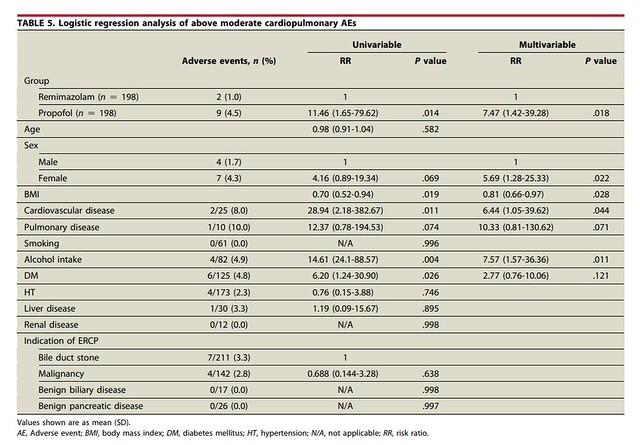
In this study, remimazolam provided effective deep sedation for ERCP with a favorable safety profile compared with propofol. Importantly, remimazolam was associated with fewer cardiopulmonary adverse events while maintaining procedural success and operator satisfaction. These findings suggest that remimazolam may be a practical and safer sedation strategy for advanced endoscopic procedures, particularly in patients at higher risk for sedation-related adverse events. To our knowledge, this is one of the largest prospective, randomized, multicenter studies evaluating remimazolam specifically in the ERCP setting.
We believe our study provides meaningful real-world evidence supporting its broader clinical application in therapeutic endoscopy. Future studies should focus on optimal dosing protocols, cost-effectiveness, and outcomes in higher-risk populations, including elderly patients and those with significant cardiopulmonary disease.
We sincerely appreciate the collaborative efforts of all participating investigators, nurses, and staff members involved in this multicenter trial. We hope this study contributes to improving the safety of therapeutic endoscopy and encourages further research into individualized sedation strategies for advanced endoscopic procedures.
Read the full article online.
The information presented in Endoscopedia reflects the opinions of the authors and does not represent the position of the American Society for Gastrointestinal Endoscopy (ASGE). ASGE expressly disclaims any warranties or guarantees, expressed or implied, and is not liable for damages of any kind in connection with the material, information, or procedures set forth.
 endoscopedia.com