
Post written by Kento Shionoya, MD, PhD, Kenjiro Yamamoto, MD, PhD, and Takao Itoi, MD, PhD, from the Department of Gastroenterology and Hepatology, Tokyo Medical University, Tokyo, Japan.

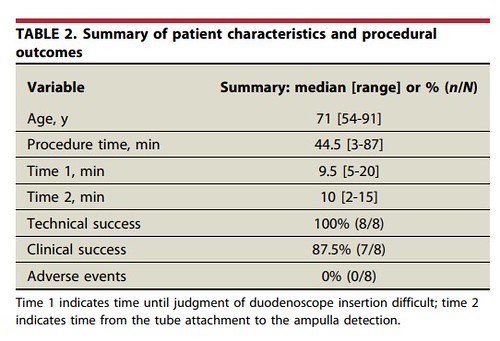
Selective biliary cannulation during ERCP can be particularly challenging when the major papilla is difficult to access because of deformity, tortuosity, or anatomical constraints in the upper GI tract. In such situations, reaching the papilla itself may become the main obstacle before standard biliary intervention can even begin. Our study evaluated the efficacy of splinting tube-assisted duodenoscope insertion in patients with an inaccessible major papilla.
In this single-center retrospective study, we examined whether use of a splinting tube could facilitate duodenoscope advancement and enable successful ERCP in these technically demanding cases. The rationale for this approach is straightforward: by providing support and reducing looping or instability, the splinting tube may help the endoscopist navigate difficult anatomy more safely and effectively.
Our findings suggest that splinting tube-assisted insertion can be a useful rescue technique when conventional duodenoscope insertion is unsuccessful. This method may improve procedural feasibility and expand the range of patients in whom ERCP can still be completed without immediately resorting to alternative drainage procedures. We believe this is clinically meaningful, especially because patients with inaccessible papillae often require biliary intervention in urgent or high-stakes settings.
An additional strength of this article is its practical relevance. The technique does not require highly specialized new equipment beyond what is already familiar in therapeutic endoscopy, and it may be considered as part of the stepwise strategy for difficult ERCP access. At the same time, careful patient selection and operator judgment remain essential, as this was a retrospective study from a single center.
To our knowledge, this is one of the few studies focusing specifically on splinting tube-assisted duodenoscope insertion for inaccessible major papillae. We hope our experience helps endoscopists recognize this technique as a valuable option in select cases and encourages further prospective evaluation of its safety, efficacy, and broader applicability.
Read the full article online.
The information presented in Endoscopedia reflects the opinions of the authors and does not represent the position of the American Society for Gastrointestinal Endoscopy (ASGE). ASGE expressly disclaims any warranties or guarantees, expressed or implied, and is not liable for damages of any kind in connection with the material, information, or procedures set forth.

