
Post written by Jennifer A. Christie, MD, MASGE, from the Division of Gastroenterology and Hepatology, University of Colorado Anschutz Medical Campus, Aurora, Colorado, and Pegah Hosseini-Carroll, MD, FASGE, from the University of Mississippi Medical Center and Baptist GI, Jackson, Mississippi, USA.

Colorectal cancer (CRC) screening continues to be a critical public health challenge. Not only do CRC screening rates need to increase, but we also need to ensure that the follow-up or completion colonoscopy rates for patients with abnormal stool or blood-based screening test results rise. Racial, ethnic, and socioeconomic disparities profoundly impact CRC outcomes.

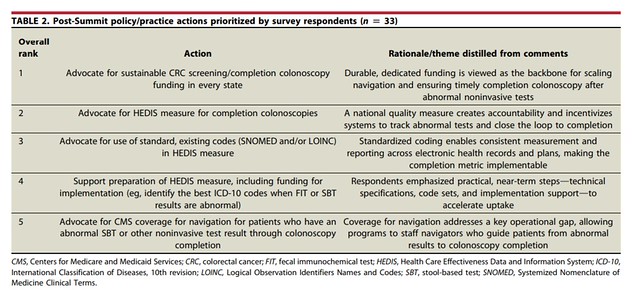
The American Society for Gastrointestinal Endoscopy launched its CRC Screening Project in 2023 to increase CRC screening and completion colonoscopy rates for underserved patients across the United States. This society document focuses on the progress of the project across the 2 program sites and policy or practice actions to improve completion colonoscopy rates.
CRC is a preventable cancer yet the second-leading cause of cancer-related deaths in the United States. The burden and trajectory of CRCs are profoundly influenced by socioeconomic determinants of health, with substantial disparities across different racial and ethnic populations.
The key message of this society document is that CRC screening is only effective when patients with an abnormal stool-based test result complete a timely follow-up colonoscopy. Despite widespread use of fecal immunochemical and stool DNA testing, many patients never receive the diagnostic colonoscopy needed to detect or prevent cancer, resulting in missed opportunities to reduce CRC deaths. This report emphasizes that gastroenterologists should view completion colonoscopy as a critical quality metric and work closely with primary care providers and other health professionals to ensure patients move efficiently from abnormal screening results to definitive evaluation.
To improve patient outcomes, this society document highlights several evidence-based strategies: implementing patient navigation programs, reducing scheduling delays, addressing transportation and financial barriers, using closed-loop tracking systems within the electronic health record, establishing strong partnerships with primary care clinics or practices, and providing culturally responsive outreach to underserved populations. Successful demonstration projects showed that combining navigation, proactive follow-up, and improved access to colonoscopy can dramatically increase completion rates. For gastroenterologists, the most effective way to improve CRC prevention is to ensure every patient with an abnormal screening test result receives timely, high-quality follow-up care.
Read the full article online.
The information presented in Endoscopedia reflects the opinions of the authors and does not represent the position of the American Society for Gastrointestinal Endoscopy (ASGE). ASGE expressly disclaims any warranties or guarantees, expressed or implied, and is not liable for damages of any kind in connection with the material, information, or procedures set forth.

