
Post written by Andrew C. Storm, MD, from Wake Forest School of Medicine, Winston-Salem, North Carolina, USA.

Poll 100 educators in gastrointestinal endoscopy, and they will probably all agree that over our careers we have been asked to do more with less time for our fellows. Duty-hour restrictions limit time in-house, but formal educational requirements and the breadth of gastrointestinal endoscopy are expanding. Learning endoscopy is significantly complex and requires time to develop complex psychomotor skills including hand-eye coordination, spatial awareness, torque, angulation, and precise control of the working end of an endoscope.
For novice endoscopists, acquiring these skills typically requires repeated exposure (ie, time!) in the endoscopy suite or access to expensive dedicated simulation equipment that is often housed in a centralized location (ie, the hospital). Our recently published study in iGIE, “Impact of a novel at-home, scope handle–based game controller on novice endoscopists,” about an endoscopy training device (ScopeQuest; Mayo Clinic, Rochester, Minn, USA), explores a novel approach: can endoscopic skills be practiced at home using a controller designed to replicate key elements of endoscope handle manipulation?
Our findings provide early evidence that this type of technology can engage novice learners and influence aspects of endoscopic performance. Importantly, the goal is not to replace hands-on endoscopy, simulation, or expert supervision. Rather, the technology may provide an additional opportunity for deliberate practice, allowing learners to repeatedly work on fundamental motor skills before applying them in a clinical environment. The concept raises questions for the future. Could structured at-home practice accelerate the endoscopic learning curve? Should the performance data be used to personalize training? Most importantly, do improvements in the gaming environment translate into improved clinical performance with a real endoscope?
Technology continues to transform the frontiers of endoscopy through advanced imaging, artificial intelligence, and increasingly sophisticated therapeutic access, resection, ablation, and tissue remodeling devices. Endoscopic education will necessarily be another frontier.
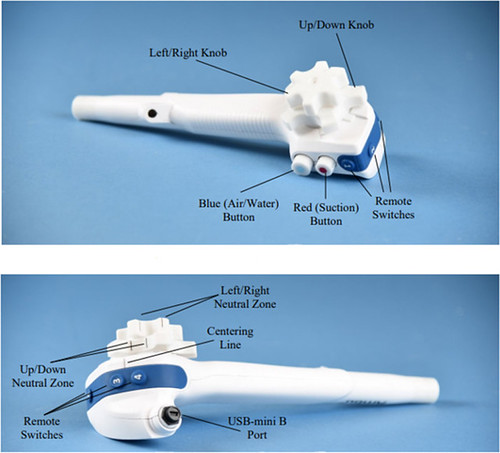
The ScopeQuest at-home endoscopy handle training device (Mayo Clinic, Rochester, Minn, USA). USB, Universal serial bus.
Visit iGIE’s Facebook, X/Twitter, LinkedIn, Instagram, and YouTube accounts for more content from the ASGE peer-reviewed journal that launched in December 2022 and has been PubMed indexed.
Read the full article online.
The information presented in Endoscopedia reflects the opinions of the authors and does not represent the position of the American Society for Gastrointestinal Endoscopy (ASGE). ASGE expressly disclaims any warranties or guarantees, expressed or implied, and is not liable for damages of any kind in connection with the material, information, or procedures set forth.

