
Post written by Fumisato Sasaki, MD, PhD, from Digestive and Lifestyle Diseases, Kagoshima University Graduate School of Medical and Dental Sciences, Kagoshima, Japan.
We present the case of an 80-year-old man with a history of distal gastrectomy who had GERD refractory to medical therapy. Endoscopy revealed Los Angeles grade B reflux esophagitis, bile retention in the esophagus and remnant stomach, and a small sliding hiatal hernia.
Because our institutional experience with endoscopic antireflux mucoplasty was limited, the local endoscopist performed the procedure with real-time guidance from an expert endoscopist in Australia using a novel high-speed mobile network-based tele-endoscopy system. The system provided high-definition, low-latency video transmission, bidirectional audio communication, video pausing, and real-time on-screen annotation. The procedure was completed without adverse events, and follow-up endoscopy demonstrated reduction of the hiatal hernia and complete resolution of reflux esophagitis, together with improvement in GERD symptom scores.
Geographic distance should not prevent clinicians from accessing expert guidance when introducing an emerging or technically demanding treatment. This video shows the feasibility of connecting a local operator with an experienced international expert during a live endoscopic procedure. In this case, the remote expert was able to observe the live endoscopic field, communicate directly with the operator, and provide immediate visual guidance using on-screen annotations. We believe this approach may be particularly valuable when introducing emerging or technically demanding procedures at institutions with limited local experience.
Our experience suggests that real-time tele-endoscopic guidance can facilitate the transfer of knowledge and technical expertise and provide practical support during advanced endoscopic procedures. Importantly, remote guidance should complement, rather than replace, the operator’s fundamental therapeutic endoscopy skills. Safe implementation also requires appropriate patient consent, institutional approval, secure handling of patient information, reliable network performance, and a predefined contingency plan in the event of communication failure.
Advances in high-speed mobile networks may make real-time international collaboration increasingly accessible. Such technology may create new opportunities for endoscopic education, dissemination of emerging techniques, and expert procedural support regardless of geographic location.
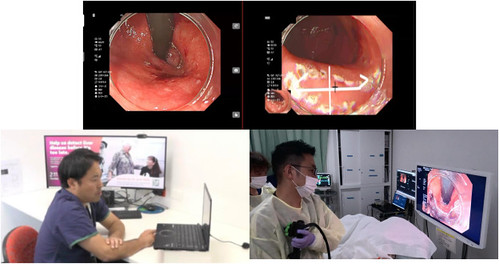
Endoscopic antireflux mucoplasty performed under real-time remote guidance using the tele-endoscopy system (Medical Edge; Zao-X, Tokyo, Japan).
Read the full article online.
The information presented in Endoscopedia reflects the opinions of the authors and does not represent the position of the American Society for Gastrointestinal Endoscopy (ASGE). ASGE expressly disclaims any warranties or guarantees, expressed or implied, and is not liable for damages of any kind in connection with the material, information, or procedures set forth.

