
Post written by Michael J. Bourke, MBBS, from the Department of Gastroenterology and Hepatology, Westmead Hospital, and Western Clinical School, The University of Sydney, Sydney, Australia.

Duodenal adenomas make endoscopists nervous, and they should. It is a part of the GI tract where adverse events can be disastrous. These 9 tips are what I actually run through when a duodenal lesion is in front of me: is this really an adenoma, am I certain it is not the papilla, which snare and which technique, and—the question asked too rarely—should this lesion be coming out at all?
Most of what goes wrong in the duodenum is decided before the snare is opened—in the choice of patient, lesion, and technique. It is an unforgiving place to work. Postpolypectomy bleeding follows hot snare resection in approximately 25% of lesions 30 mm or larger; perforation allows bile and pancreatic enzymes to escape into the retroperitoneum; and clip closure of a large defect is rarely feasible.
Technique also has shifted substantially in recent years, with cold snare resection and margin thermal ablation now weekly practice in our unit. Each carries its own rationale and its own tradeoff, and those need to be understood before the technique is chosen. The best technique is not the same for every lesion or every patient; it is the one that gives this patient, with this lesion and these comorbidities, the best outcome. That is what I wanted to emphasize.
Three things are worth taking away. Look at the colon: patients with a duodenal adenoma carry nearly double the rate of colonic adenomas (61% vs 37%). Choose the technique for the lesion rather than out of habit: cold snare has largely displaced hot resection for flat lesions in our unit, with bleeding falling from 16.7% to 4.0%, although recurrence climbs in bigger lesions (24.4% vs 2.3%).
In the frail and comorbid patient with a large, bland, homogenous lesion, the wise decision is usually to do nothing and bring them back in a year. We have found this to be a very safe approach. Most of the patients succumb to their underlying comorbidities, not the duodenal adenoma. What we still lack are prospective data on where the cold snare ceiling resides and better data to underpin the conservative observation approach in the elderly.
Two videos accompany the article: 1 demonstrating systematic piecemeal cold snare polypectomy with a 20% to 30% overlap of the defect at each snare placement, and 1 demonstrating hot EMR with margin thermal ablation of an extensive circumferential lesion. These lesions are uncommon, and outcomes are strongly operator dependent, so referral to a high-volume center remains reasonable for any duodenal lesion larger than 20 mm.
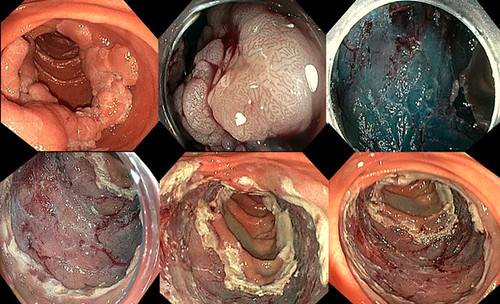
Extensive 80% circumferential 0-IIa+Is granular duodenal adenoma removed by hot endoscopic resection, followed by margin thermal ablation. Defect closure is not feasible. Histopathology was a tubulovillous adenoma with low-grade dysplasia.
Read the full article online.
The information presented in Endoscopedia reflects the opinions of the authors and does not represent the position of the American Society for Gastrointestinal Endoscopy (ASGE). ASGE expressly disclaims any warranties or guarantees, expressed or implied, and is not liable for damages of any kind in connection with the material, information, or procedures set forth.

