
Post written by Saurabh Chandan, MD, from Houston Methodist West Hospital, Houston, Texas, USA.

The primary focus of this study was to review and summarize endoscopic techniques to mitigate and lower the incidence of interval colon cancer, which is defined as a colorectal cancer (CRC) diagnosed after a screening examination or test in which no cancer is detected, and before the date of the next recommended exam.
Multiple societies including the U.S. Multi-Society Task Force, American Gastroenterological Association, American Society for Gastrointestinal Endoscopy, and American College of Gastroenterology have stated that a high-quality colonoscopy examination, based on a standardized set of quality metrics, is imperative for detection and removal of precancerous lesions. As such, investigating strategies to decrease incidence of interval CRC is crucial, as there might have been a missed opportunity to identify a cancer or identify and fully resect a precancerous lesion at a prior colonoscopy examination.
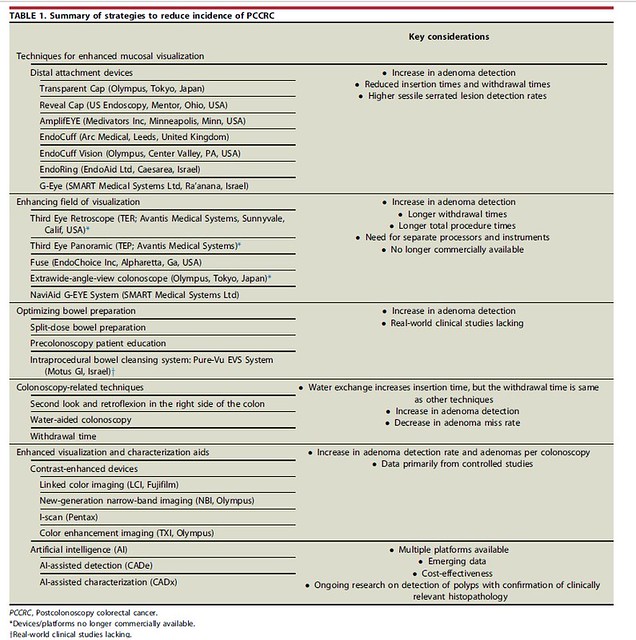
Incomplete resection (especially of lesions >10 mm in size), missed lesions, and those in the right side of the colon, as well as an incomplete examination at colonoscopy are modifiable risk factors to reduce incidence of postcolonoscopy CRC (PCCRC). In addition, an inverse relationship between quality metrics such as adenoma detection rate (ADR) and PCCRC, including advanced-stage interval cancer and fatal interval cancer, has been reported. Techniques for enhanced mucosal visualization such as use of distal attachment devices, proximal colon retroflexion, and second-look examination have been shown to yield a higher ADR and a lower adenoma miss rate, especially among endoscopists with lower baseline ADRs.
Furthermore, optimizing bowel preparation with use of split-prep and intraprocedural bowel cleansing systems allows for a more-thorough examination of the colon mucosa. Although techniques for enhanced visualization and characterization aids including texture and color enhancement imaging and artificial intelligence platforms (computer-aided detection and diagnosis) have been introduced in recent times, their cost-effectiveness and ability to detect lesions with clinically relevant histopathology continues to be an area of active ongoing research.
Optimization of colonoscopy techniques, with or without the use of adjunctive methods, remains of paramount importance in increasing ADR and reducing adenoma and polyp miss rates, thereby leading to an eventual decline in PCCRC. Artificial intelligence and image enhancement platforms are at the forefront of technologies that continue to be explored rapidly, but thorough and periodic assessment of quality metrics, operator experience, and training need to go hand in hand with technological advancements to collectively reduce the incidence of PCCRC rates worldwide.
Read the full article online.
The information presented in Endoscopedia reflects the opinions of the authors and does not represent the position of the American Society for Gastrointestinal Endoscopy (ASGE). ASGE expressly disclaims any warranties or guarantees, expressed or implied, and is not liable for damages of any kind in connection with the material, information, or procedures set forth.
 endoscopedia.com